

When I work with dogs and their owners, one thing becomes clear very quickly: the right reward can make learning easier. Dog training treats can help dogs understand which behaviors we want repeated, especially when we are teaching something new or practicing around distractions.
But treats work best when they are used with good timing, clear communication, and a training plan. At Off Leash K9 Training of SW Missouri, I want owners to understand that the goal is not simply to carry snacks everywhere. The goal is to use rewards strategically while building obedience, confidence, and reliability.
How Dog Training Treats Support Better Learning
Dogs tend to repeat behaviors that lead to something they value. That is why dog training treats can be useful when teaching basic commands such as sit, place, down, or recall.
According to the American Kennel Club, rewards are most effective when they are meaningful to the individual dog and delivered at the right time. Some dogs are highly food motivated, while others may respond more strongly to toys, praise, or play.
When I use food during training, I focus on a few simple principles:
- Reward the correct behavior quickly.
- Use small pieces so the dog can return to training right away.
- Choose a reward the dog actually values.
- Increase the value of the reward when distractions increase.
- Avoid showing the treat before every command.
That last point is especially important. We want the dog to respond to the command, not only because they see food in our hand.
Owners who want to build stronger everyday habits can also read our guide on reinforcing training for busy dog owners. Small, consistent moments of practice can make a meaningful difference.
Choosing Dog Training Treats for Different Situations
Not every training environment is equally challenging. Your living room might be easy for your dog, while a busy park in Springfield can suddenly make focusing much harder.
I like to think of dog training treats in levels.
A lower-value reward may work well when practicing a familiar command inside the house. When your dog is learning something difficult or working around dogs, people, smells, or traffic, a higher-value reward may help maintain attention.
The treat itself should also be easy to eat. Large or hard treats can slow down a training session because the dog needs extra time to chew. Small, quickly consumed rewards allow us to complete more repetitions without interrupting the flow of training.
This does not mean your dog should depend on food forever. As obedience becomes stronger, rewards can become less predictable and can include praise, play, access to something the dog enjoys, or other reinforcement.
Our article about obedience training as a lifelong journey explains why maintaining good behavior matters long after the first commands are learned.
For owners who want more structure and professional guidance, our Dog Training Programs can help develop stronger obedience, dog confidence, and off-leash reliability.
Regional Dog-Friendly Business Spotlight
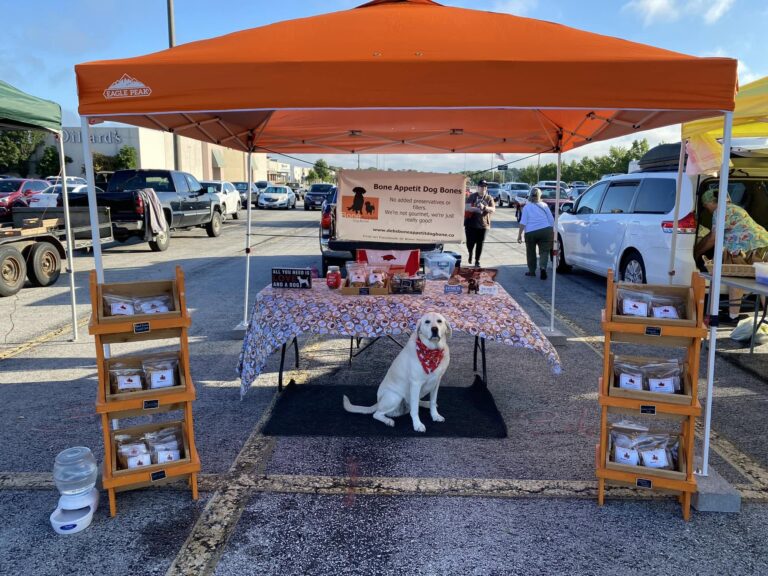
A Springfield business that fits naturally into this week’s topic is Bone Appetit Dog Treats.
Located in Springfield, Missouri, Bone Appetit Dog Treats is a family-owned business that makes hand-crafted dog treats using human-grade ingredients. Their website notes that the treats are made locally in a Missouri Department of Agriculture inspected home kitchen.
For dog owners who enjoy supporting local businesses, having a Springfield-based source for treats can be a convenient option when selecting rewards for everyday life.
The important training connection is not that one particular treat will magically improve behavior. It is learning what your dog values and then using that reward correctly.
Good dog training treats should help support communication between you and your dog. When the reward is paired with precise timing and clear expectations, your dog has an easier time understanding which decision earned the reward.
If your dog has allergies, food sensitivities, weight concerns, or other dietary restrictions, it is always worth checking ingredients and discussing treat choices with your veterinarian.
From Treats to Reliable Obedience
One of the biggest mistakes I see is relying on dog training treats without gradually building reliability.
For example, a dog may sit perfectly when the owner is holding food but ignore the same command when the treats disappear. That usually means the food has accidentally become part of the command.
Instead, I want the command itself to matter.
During professional dog training, we work toward a behavior transformation where dogs understand expectations in different environments. That includes practicing when the house is quiet, when visitors arrive, during neighborhood walks, and eventually around more significant distractions.
As the dog becomes more reliable, dog training treats can become one tool among many instead of the only reason the dog listens.
Programs such as Basic Obedience, Private Lessons, Board and Train, and Off-Leash Obedience are designed to give owners a clearer structure for developing dependable communication.
At Off Leash K9 Training of SW Missouri, the bigger goal is not simply teaching a dog to perform a command for food. We want dogs and owners to develop reliable habits that carry into real life.
Ready to Build Better Training Habits?
If your dog listens beautifully when treats are visible but struggles once distractions appear, it may be time to add more structure to your training.
Dog training treats can be an excellent teaching tool, but timing, consistency, obedience training, and clear communication are what help turn practice into dependable behavior.
If you are in Springfield, MO or elsewhere in SW Missouri and want help building better focus, dog confidence, and off-leash reliability, contact Off Leash K9 Training of SW Missouri to learn how professional dog training can help you and your dog move forward together.